autotelic – the purpose of doing something is well is sufficient in itself
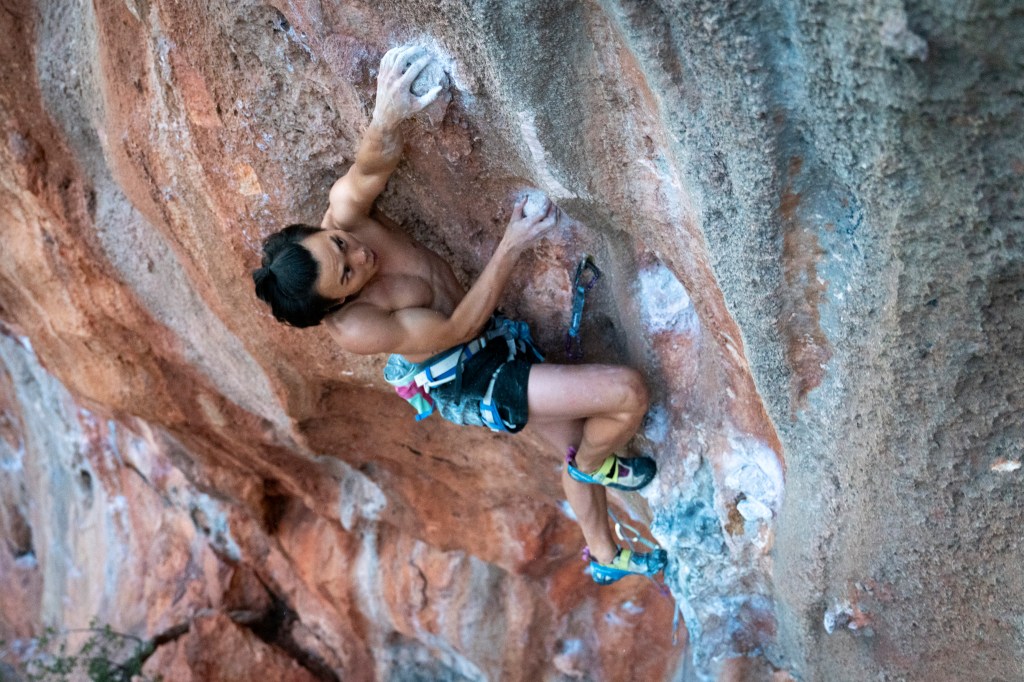
I stood under Turkish Airways after 10 sessions and 20+ hours on the rock, on the last day of my second trip to Turkey, 3 hours before my flight back home. I got onto the rock, and after 7 minutes on the wall, I had skipped 7c+ and 8a.
Reading The Zen of Climbing six months later, I realised what made this attempt so different from the rest—what made me dance and flow on the wall, fluttering between holds. I had discarded all attachment and embraced an autotelic mindset.
Projecting Turkish Airways had constantly filled my mind with complex, uncontrollable feelings. I wanted to climb it to prove I could climb 8a+. I wanted to prove I was talented. Five sessions in, I wanted to not let my efforts and time go to waste. I was afraid of failing, and waves of doubt reverberated through my mind. I wanted to not let my belayers’ time and patience amount to nothing. I wanted the people at Flying Goat to congratulate me and be happy for me.
On the last day of the trip, an upsetting realisation dawned on me—my skin was shredded, my body was fatigued from a week of climbing. Logically, my condition was so poor, and it was unlikely I would succeed. In the three-hour window before the sunset, and my last attempt before I flew back to London, I begrudgingly accepted this, and what came was a detachment from all expectations, from all extrinsic factors weighing on my mind. Climbing books often talk about optimising your mental game in order to realise your full potential, beyond your perceived physical limits—and for the first time in my climbing apprenticeship, I truly understood and embodied this.
I accepted that if I sent or not, the world would still be the same, my self-worth would remain unchanged. I wouldn’t be a better or worse climber—I would be the same person, just at the top of the wall, having clipped the chains. I knew that physically I could do it—it was just a matter of time, and this took away the contrived nature of having ‘conquered’ the route only when you stood at the top. I had already displayed mastery and done my due diligence of this Turkish limestone. Borrowing a page from Zen philosophy, the meaning and purpose of this route had already been met. Climbing it with grace and entering a state of flow was sufficient, and I was satisfied.
Seven minutes later, with complete attention, with no thoughts of failure or expectations, I embraced the rock, letting my body be affected by movement and move with pure instinct. Then, I pulled the rope up and slotted it into the anchor.
Two minutes of tears later, I got into the cab to Antalya airport.
 of crux and kaya - dillon's deep dive